Love is important in every culture, and Japanese names show it in a simple and thoughtful way. In this guide, you will find Japanese names that mean love, care, and warm feelings.
Many of these names come from kanji, where each character adds a clear meaning. This makes the names feel personal and meaningful.
Whether you are picking a name for a baby, a story, or just learning, this guide will give you easy and helpful ideas.
What Makes Japanese Names About Love Special
Japanese names are built using kanji characters. Each kanji has its own meaning, and when combined, they create layered meanings.
For example, the kanji 愛 (ai) directly means love. But love is not always expressed so directly. Many names include ideas like affection, care, beauty, harmony, and connection.
This means a name can express love in different ways:
- Romantic love
- Family love
- Kindness and compassion
- Inner warmth and emotional strength
Because of this, Japanese love names often feel gentle and meaningful rather than overly bold.

Japanese Names That Mean Love
Generate meaningful Japanese names that reflect love, affection, and emotional warmth. Discover beautiful and unique name ideas instantly.
Japanese Names Meaning Love For Girl
From my experience, feminine names express love most softly, with options like Aiko and Yua showing warmth and emotional depth.
These names feel natural, gentle, and widely appreciated.
- Aiko (愛子) – child of love
- Aimi (愛美) – love and beauty
- Airi (愛莉) – love and jasmine
- Aina (愛菜) – love and greens
- Aisa (愛紗) – loving silk
- Aiya (愛弥) – enduring love
- Aine (愛音) – sound of love
- Aika (愛花) – love and flower
- Aisae (愛恵) – love and blessing
- Airiha (愛里葉) – love, village, and leaf
- Yua (結愛) – binding love
- Mana (愛 / 真愛) – love / true love
- Rena (恋奈) – love and calm
- Ren (恋) – love
- Kokoro (心) – heart
- Megumi (恵) – blessing (loving kindness)
- Emi (恵美) – blessed beauty
- Noa (乃愛) – love and affection
- Nanae (七恵) – seven blessings
- Hina (陽菜) – sun and warmth
- Haruka (遥 / 春香) – distant / spring fragrance
- Sakura (桜) – cherry blossom (symbol of love)
- Mio (美桜) – beautiful cherry blossom
- Nanami (七海) – seven seas (deep feelings)
- Hinata (陽向) – facing the sun
- Hikari (光) – light (warm love)
- Saki (咲) – bloom
- Yume (夢) – dream
- Kaori (香織) – fragrance and weave
- Ayaka (彩花) – colorful flower
- Aiyu (愛優) – gentle love
- Aiyori (愛依) – dependent love
- Aisora (愛空) – love and sky
- Aihoshi (愛星) – love and star
- Aikaze (愛風) – love wind
- Aitsuki (愛月) – love and moon
- Ainari (愛成) – growing love
- Aisato (愛里) – village of love
- Aiharu (愛春) – love and spring
- Ainoka (愛乃花) – flower of love
- Kanon (花音) – flower sound (gentle love)
- Misaki (美咲) – beautiful bloom
- Yurika (百合花) – lily flower
- Reina (麗奈) – lovely and graceful
- Asuka (明日香) – fragrance of tomorrow
- Sayaka (清香) – pure fragrance
- Tomomi (友美) – beautiful friend (loving bond)
- Chika (千花) – thousand flowers
- Erena (恵恋奈) – blessed love
- Riko (莉子) – child of jasmine
- Yukari (縁 / ゆかり) – connection, bond
- Kiyomi (清美) – pure beauty
- Natsumi (夏美) – summer beauty (warmth)
- Ayumi (歩美) – walk with beauty (loving journey)
- Yoshimi (良美) – good and beautiful (kind love)
Japanese Names Meaning Love For Boy
Male names often blend love with strength, such as Ren or Aito, which feel balanced and meaningful. They carry emotion without losing a strong identity.
- Aito (愛翔) – love and flight
- Aiya (愛也) – loving presence
- Aito (愛人 alt.) – beloved person
- Aiki (愛輝) – love and brightness
- Aimi (愛実) – love and truth
- Aihiko (愛彦) – prince of love
- Aito (愛斗) – love and battle/spirit
- Ainori (愛則) – rule of love
- Aitsugu (愛継) – continuing love
- Aiharu (愛晴) – clear, bright love
- Ren (恋) – love
- Renji (恋司) – one who governs love
- Rento (恋翔) – love that soars
- Renya (恋也) – loving presence
- Renjiro (恋次郎) – second son of love
- Renichi (恋一) – first love
- Renma (恋真) – true love
- Renji (蓮司 alt.) – lotus ruler (symbol of love)
- Rensuke (恋助) – helper of love
- Renzo (恋蔵) – storehouse of love
- Manabu (愛ぶ) – to value or learn love
- Manato (愛翔) – love and flight
- Manaya (愛也) – loving presence
- Manabu (学 alt.) – learning (linked to care and growth)
- Manato (真愛人) – true loving person
- Manaki (愛輝) – shining love
- Manato (愛斗 alt.) – love and strength
- Manaya (愛也 alt.) – one filled with love
- Manari (愛成) – growing love
- Manato (愛翔 alt.) – love that rises
- Yoshimi (義美) – righteous beauty (loving nature)
- Yoshito (義人) – good-hearted person
- Yoshinari (義成) – becoming good/loving
- Yoshiki (良輝) – shining goodness
- Yoshiharu (義晴) – bright kindness
- Yoshito (良人) – good, loving person
- Yoshinobu (義信) – faithful love
- Yoshiki (良樹) – good tree (growth and care)
- Yoshimasa (義正) – righteous and kind
- Yoshiyuki (義幸) – loving happiness
- Haruto (陽翔) – sunlight and flight (warm love)
- Kaito (海翔) – ocean flight (deep emotion)
- Naoki (直樹) – honest tree (loyal love)
- Masato (正人) – righteous person (caring nature)
- Takumi (匠) – skill and care
- Sota (蒼太) – big blue sky (open heart)
- Hikaru (光) – light (warm love)
- Daiki (大輝) – great brightness (strong love)
- Keita (恵太) – blessed, kind person
- Shota (翔太) – soaring strong spirit
- Aisuke (愛助) – helper of love
- Aikichi (愛吉) – fortunate love
- Aimasa (愛正) – righteous love
- Aitaka (愛高) – noble love
- Ainobu (愛信) – faithful love

Japanese First Names That Meaning Love
First names clearly highlight love through kanji like 愛, making them simple yet expressive. Names like Aimi and Mana are easy to understand and widely used.
- Ai (愛) – love
- Aiko (愛子) – child of love
- Aimi (愛美) – love and beauty
- Airi (愛莉) – love and jasmine
- Aina (愛菜) – love and greens
- Aisa (愛紗) – loving silk
- Aiya (愛弥) – enduring love
- Aine (愛音) – sound of love
- Aika (愛花) – love and flower
- Aisae (愛恵) – love and blessing
- Yua (結愛) – binding love
- Mana (愛 / 真愛) – love / true love
- Noa (乃愛) – love and affection
- Rena (恋奈) – love and calm
- Ren (恋) – love
- Kokoro (心) – heart
- Megumi (恵) – blessing (loving kindness)
- Emi (恵美) – blessed beauty
- Nanae (七恵) – seven blessings
- Hina (陽菜) – sun and warmth
- Haruka (遥 / 春香) – distant / spring fragrance
- Sakura (桜) – cherry blossom (symbol of love)
- Mio (美桜) – beautiful cherry blossom
- Nanami (七海) – seven seas (deep feeling)
- Hinata (陽向) – facing the sun
- Hikari (光) – light (warm love)
- Saki (咲) – bloom
- Yume (夢) – dream
- Kaori (香織) – fragrance and weave
- Ayaka (彩花) – colorful flower
- Aiyu (愛優) – gentle love
- Aiyori (愛依) – dependent love
- Aisora (愛空) – love and sky
- Aihoshi (愛星) – love and star
- Aikaze (愛風) – love wind
- Aitsuki (愛月) – love and moon
- Ainari (愛成) – growing love
- Aisato (愛里) – village of love
- Aiharu (愛春) – love and spring
- Ainoka (愛乃花) – flower of love
- Manato (愛翔) – love and flight
- Aito (愛斗) – love and strength
- Aiki (愛輝) – love and brightness
- Aisuke (愛助) – helper of love
- Ainobu (愛信) – faithful love
- Aitaka (愛高) – noble love
- Aimasa (愛正) – righteous love
- Aikichi (愛吉) – lucky love
- Aitsugu (愛継) – continuing love
- Ainori (愛則) – rule of love
- Kanon (花音) – flower sound (gentle love)
- Misaki (美咲) – beautiful bloom
- Yurika (百合花) – lily flower (pure love)
- Reina (麗奈) – lovely and graceful
- Tomomi (友美) – beautiful friendship (loving bond)
Japanese Last Names That Meaning Love
Last names rarely mean love directly but reflect harmony and connection. They add subtle emotional value rather than direct meaning.
- Aida (間田 / 相田) – between fields / mutual connection
- Aikawa (相川 / 愛川) – love and river
- Aimoto (相本 / 愛本) – origin of love
- Aizawa (相沢 / 愛沢) – love and marsh
- Aihara (相原 / 愛原) – love field/plain
- Aisaka (相坂 / 愛坂) – love hill
- Ainuma (相沼 / 愛沼) – love marsh
- Aino (相野 / 愛野) – love field
- Aisawa (相沢 / 愛沢) – love marsh
- Aimiya (愛宮) – love shrine
- Enomoto (榎本) – base of harmony/tree (connection)
- Endo (遠藤) – distant wisteria (lasting bond)
- Enomura (榎村) – village connection
- Enokida (榎田) – rice field of harmony
- Enjoji (円城寺) – temple of harmony
- Enami (江波) – river waves (flowing bond)
- Enokawa (榎川) – river of connection
- Enoshima (江の島) – island of harmony
- Enomura (縁村) – village of bonds
- Enkawa (縁川) – river of connection
- Kizuna (絆) – bond, deep connection
- Kizaki (木崎) – tree cape (symbol of life bond)
- Kizawa (木沢) – tree and marsh (growth and link)
- Kizuno (絆野) – field of bonds
- Kizumi (絆美) – beautiful bond
- Kizuhara (絆原) – plain of connection
- Kizutani (絆谷) – valley of bonds
- Kizumoto (絆本) – origin of bonds
- Kizukawa (絆川) – river of bonds
- Kizusawa (絆沢) – marsh of connection
- Nakayoshi (仲良し) – good relationship
- Nakano (中野) – central field (togetherness)
- Nakama (仲間) – companions, friends
- Nakagawa (中川) – central river (connection)
- Nakamura (中村) – central village (community)
- Nakashima (中島) – central island (unity)
- Nakayama (中山) – central mountain (balance)
- Nakazawa (中沢) – central marsh
- Nakata (中田) – central rice field
- Nakanojo (中之条) – central connection
- Yui (結) – tie, bind, connect
- Yuino (結野) – field of connection
- Yuimura (結村) – village of bonds
- Yuikawa (結川) – river of connection
- Yuisawa (結沢) – marsh of bonds
- Yuihara (結原) – plain of connection
- Yuitani (結谷) – valley of bonds
- Yuimoto (結本) – origin of connection
- Yuisaki (結崎) – cape of bonds
- Yuizaki (結崎 alt.) – bonded cape
- Omoi (想い) – feelings, deep emotion
- Omoide (思出) – memories (loving past)
- Omoikawa (想川) – river of feelings
- Omoihara (想原) – field of emotions
- Omoizawa (想沢) – marsh of feelings
Unique Japanese Names Meaning Love
Unique names like Aisora or Aikaze combine love with nature. They feel modern while still keeping cultural meaning.
- Aiyu (愛優) – gentle love
- Aiyori (愛依) – dependent, devoted love
- Aisora (愛空) – love and sky
- Aihoshi (愛星) – love and star
- Aikaze (愛風) – love wind
- Aitsuki (愛月) – love and moon
- Ainari (愛成) – growing love
- Aisato (愛里) – village of love
- Aiharu (愛春) – love and spring
- Ainoka (愛乃花) – flower of love
- Aikane (愛奏) – melody of love
- Ainari (愛也里) – love that continues
- Aisaki (愛咲) – love that blooms
- Ainori (愛紀) – record of love
- Aikiyo (愛清代) – pure love era
- Ainagi (愛凪) – calm, peaceful love
- Aisumi (愛澄) – clear, pure love
- Aikaho (愛花穂) – flower and grain of love
- Ainokae (愛乃絵) – picture of love
- Aisorae (愛空絵) – sky painting of love
- Yua (結愛) – binding love
- Yuai (結愛 alt.) – tied love
- Yukoa (結心愛) – heart-bound love
- Yuae (結愛絵) – love picture
- Yunari (結成) – forming bonds
- Yumai (結舞愛) – dancing love
- Yukari (結里) – connection and village
- Yunoka (結乃花) – flower of connection
- Yukaze (結風) – connecting wind
- Yusora (結空) – connected sky
- Renai (恋愛) – romantic love
- Renka (恋花) – love flower
- Rensora (恋空) – love sky
- Renkae (恋花絵) – love flower painting
- Renmi (恋美) – love beauty
- Renka (蓮花 alt.) – lotus flower (symbol of love)
- Rensaki (恋咲) – blooming love
- Renkao (恋香) – fragrance of love
- Renshi (恋詩) – love poem
- Renkae (恋歌) – love song
- Kokoi (心恋) – heart in love
- Kokona (心愛) – heart and love
- Kokomi (心美) – beautiful heart
- Kokoroa (心愛 alt.) – loving heart
- Kokonae (心苗) – heart seedling
- Kokori (心里) – heart village
- Kokomiya (心宮) – heart shrine
- Kokoka (心花) – heart flower
- Kokosora (心空) – heart sky
- Kokone (心音) – sound of heart
- Aishin (愛心) – loving heart
- Aisora (愛空 alt.) – love sky
- Aikoro (愛心呂) – deep loving heart
- Ainowa (愛和) – harmony of love
- Aisaki (愛咲 alt.) – love blossom
Cute Japanese Names Meaning Love
Cute names focus on soft sounds like Koyuki or Aina. They feel light, warm, and easy to say.
- Aiko (愛子) – child of love
- Aimi (愛美) – love and beauty
- Airi (愛莉) – love and jasmine
- Aina (愛菜) – love and greens
- Aisa (愛紗) – loving silk
- Aine (愛音) – sound of love
- Aika (愛花) – love and flower
- Aisae (愛恵) – love and blessing
- Airiha (愛里葉) – love, village, and leaf
- Aiyu (愛優) – gentle love
- Yua (結愛) – binding love
- Yui (結衣) – tied garment (connection and care)
- Yuka (結花) – tied flower
- Yume (夢) – dream (sweet affection)
- Yuna (結奈) – gentle bond
- Yuri (百合) – lily flower (pure love)
- Yukari (縁) – connection, bond
- Yuno (結乃) – of connection
- Yukae (結絵) – connection picture
- Yumi (優美) – gentle beauty
- Kokoro (心) – heart
- Kokona (心愛) – heart and love
- Kokomi (心美) – beautiful heart
- Kokone (心音) – sound of heart
- Kokoa (心愛 alt.) – loving heart
- Kokonae (心苗) – heart seedling
- Kokori (心里) – heart village
- Kokoka (心花) – heart flower
- Kokosora (心空) – heart sky
- Kokomiya (心宮) – heart shrine
- Ren (恋) – love
- Rena (恋奈) – love and calm
- Renka (恋花) – love flower
- Renmi (恋美) – love beauty
- Rensaki (恋咲) – blooming love
- Renkae (恋絵) – love picture
- Renae (恋恵) – love blessing
- Renko (恋子) – child of love
- Renna (恋奈 alt.) – gentle love
- Renao (恋緒) – thread of love
- Mimi (美々) – very beautiful (cute affection)
- Nana (奈々) – soft, gentle sound
- Hina (陽菜) – sun and warmth
- Momo (桃) – peach (sweet love)
- Sora (空) – sky (open heart)
- Hikari (光) – light (warm love)
- Emi (恵美) – blessed beauty
- Noa (乃愛) – love and affection
- Mana (愛) – love
- Saki (咲) – bloom
- Ainoka (愛乃花) – flower of love
- Aisora (愛空) – love sky
- Aihoshi (愛星) – love star
- Aikaze (愛風) – love breeze
- Aitsuki (愛月) – love moon
Unisex Japanese Names Meaning Love
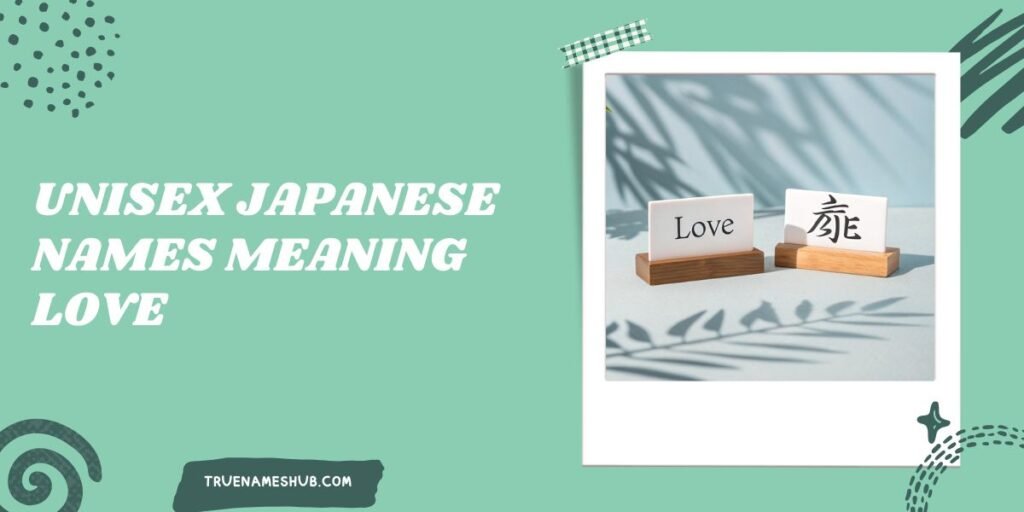
Unisex options like Ai and Ren work for any gender. They are simple, flexible, and meaningful.
- Ai (愛) – love
- Ren (恋 / 蓮) – love / lotus (symbol of purity)
- Yua (結愛) – binding love
- Mana (愛 / 真愛) – love / true love
- Noa (乃愛) – love and affection
- Airi (愛理) – love and reason
- Aimi (愛実) – love and truth
- Aika (愛花) – love and flower
- Aine (愛音) – sound of love
- Aisa (愛紗) – loving silk
- Kokoro (心) – heart
- Kokone (心音) – sound of heart
- Kokomi (心美) – beautiful heart
- Kokona (心愛) – heart and love
- Kokori (心里) – heart village
- Kokosora (心空) – heart sky
- Kokoka (心花) – heart flower
- Kokomiya (心宮) – heart shrine
- Kokonae (心苗) – heart seedling
- Kokoi (心恋) – heart in love
- Yui (結) – bind, connect
- Yuki (結希) – connected hope
- Yuno (結乃) – of connection
- Yuma (結真) – true connection
- Yuri (結理 / 百合) – connection reason / lily
- Yuka (結花) – connected flower
- Yuto (結翔) – connection and flight
- Yusei (結星) – connected star
- Yura (結良) – good connection
- Yukiya (結也) – connected presence
- Aisora (愛空) – love and sky
- Aikaze (愛風) – love wind
- Aitsuki (愛月) – love and moon
- Aihoshi (愛星) – love and star
- Ainari (愛成) – growing love
- Aisato (愛里) – village of love
- Aiharu (愛春) – love and spring
- Ainoka (愛乃花) – flower of love
- Aiyu (愛優) – gentle love
- Aiyori (愛依) – devoted love
- Renka (恋花) – love flower
- Rensora (恋空) – love sky
- Renmi (恋美) – love beauty
- Rensaki (恋咲) – blooming love
- Renshi (恋詩) – love poem
- Renkae (恋歌) – love song
- Renkao (恋香) – fragrance of love
- Renao (恋緒) – thread of love
- Renya (恋也) – loving presence
- Rento (恋翔) – love that flies
- Hikari (光) – light (warm love)
- Sora (空) – sky (open heart)
- Haruka (遥) – distant connection
- Hinata (陽向) – facing the sun (warmth)
- Akira (明) – bright (clear, loving nature)
Beautiful Japanese Names That Represent Love
Names like Miyuki and Hikari connect beauty with emotion. They feel elegant and poetic.
- Aiko (愛子) – child of love
- Aimi (愛美) – love and beauty
- Airi (愛莉) – love and jasmine
- Aina (愛菜) – love and freshness
- Aika (愛花) – love and flower
- Aine (愛音) – sound of love
- Aisae (愛恵) – love and blessing
- Aiyu (愛優) – gentle love
- Aisora (愛空) – love and sky
- Aihoshi (愛星) – love and star
- Yua (結愛) – binding love
- Yui (結衣) – connection and care
- Yuna (結奈) – gentle bond
- Yume (夢) – dream (loving feeling)
- Yuri (百合) – lily (pure love)
- Yukari (縁) – connection, bond
- Yuno (結乃) – of connection
- Yumi (優美) – gentle beauty
- Yuka (結花) – tied flower
- Yuae (結愛絵) – love picture
- Kokoro (心) – heart
- Kokomi (心美) – beautiful heart
- Kokona (心愛) – heart and love
- Kokone (心音) – sound of heart
- Kokoka (心花) – heart flower
- Kokosora (心空) – heart sky
- Kokomiya (心宮) – heart shrine
- Kokori (心里) – heart village
- Kokonae (心苗) – heart seedling
- Kokoi (心恋) – heart in love
- Ren (恋) – love
- Rena (恋奈) – love and calm
- Renka (恋花) – love flower
- Renmi (恋美) – love beauty
- Rensaki (恋咲) – blooming love
- Renkae (恋絵) – love picture
- Renae (恋恵) – love blessing
- Renko (恋子) – child of love
- Renshi (恋詩) – love poem
- Renkao (恋香) – fragrance of love
- Miyuki (美雪) – beautiful snow (pure love)
- Hikari (光) – light (warm love)
- Sakura (桜) – cherry blossom (romantic beauty)
- Hina (陽菜) – sun and warmth
- Emi (恵美) – blessed beauty
- Noa (乃愛) – love and affection
- Mana (愛 / 真愛) – love / true love
- Kaori (香織) – fragrance and elegance
- Ayaka (彩花) – colorful flower
- Nanami (七海) – deep feelings like the sea
- Hinata (陽向) – facing the sun (warm affection)
- Haruka (遥 / 春香) – gentle, distant love
- Sora (空) – sky (open heart)
- Akari (明里) – bright village (warm connection)
- Reina (麗奈) – lovely and graceful
Popular Japanese Names That Mean Love
Popular names like Aiko, Ren, and Yua stay relevant due to their simplicity. They are trusted and widely recognized.
- Ai (愛) – love
- Aiko (愛子) – child of love
- Aimi (愛美) – love and beauty
- Airi (愛莉) – love and jasmine
- Aina (愛菜) – love and greens
- Aika (愛花) – love and flower
- Aine (愛音) – sound of love
- Aisa (愛紗) – loving silk
- Aisae (愛恵) – love and blessing
- Aiyu (愛優) – gentle love
- Yua (結愛) – binding love
- Yui (結衣) – connection and care
- Yuna (結奈) – gentle bond
- Yuki (結希) – connected hope
- Yuka (結花) – tied flower
- Yuno (結乃) – of connection
- Yuri (結理 / 百合) – connection / lily
- Yumi (優美) – gentle beauty
- Yume (夢) – dream (loving feeling)
- Yukari (縁) – connection, bond
- Ren (恋 / 蓮) – love / lotus
- Rena (恋奈) – love and calm
- Renka (恋花) – love flower
- Renmi (恋美) – love beauty
- Rensaki (恋咲) – blooming love
- Renkae (恋絵) – love picture
- Renae (恋恵) – love blessing
- Renko (恋子) – child of love
- Renshi (恋詩) – love poem
- Renkao (恋香) – fragrance of love
- Kokoro (心) – heart
- Kokona (心愛) – heart and love
- Kokomi (心美) – beautiful heart
- Kokone (心音) – sound of heart
- Kokoka (心花) – heart flower
- Kokori (心里) – heart village
- Kokosora (心空) – heart sky
- Kokomiya (心宮) – heart shrine
- Kokonae (心苗) – heart seedling
- Kokoi (心恋) – heart in love
- Mana (愛 / 真愛) – love / true love
- Noa (乃愛) – love and affection
- Emi (恵美) – blessed beauty
- Hina (陽菜) – sun and warmth
- Sakura (桜) – cherry blossom (romantic love)
- Hikari (光) – light (warm love)
- Kaori (香織) – fragrance and elegance
- Ayaka (彩花) – colorful flower
- Nanami (七海) – deep emotion like the sea
- Hinata (陽向) – facing the sun
- Haruka (遥 / 春香) – gentle affection / spring fragrance
- Sora (空) – sky (open heart)
- Akari (明里) – bright and warm
- Reina (麗奈) – lovely and graceful
- Miyuki (美雪) – beautiful snow (pure love)
How to Choose the Right Japanese Love Names
Choosing a name is not only about meaning. It is also about how it feels when spoken and how it fits your purpose.
Here are a few simple tips:
Focus on Meaning
First Pick a name that clearly represents the kind of love you want to express, whether it is warmth, kindness, or emotional strength.
Consider Pronunciation
Some names may look beautiful but feel difficult to pronounce. Choose something that feels natural.
Think About Context
A name for a baby, brand, or story character may need a slightly different tone.
Keep It Simple
Names with clear meanings and simple sounds often have a stronger impact.
At a Glance: Japanese Names That Mean Love
Japanese names that mean love offer more than just a beautiful sound. They carry emotional depth, cultural meaning, and a sense of calm expression. From simple names like Ai to more layered ones like Yua or Aikaze, each name reflects love in its own unique way.
When choosing a name, focus on meaning, clarity, and how it feels to you. The best name is one that connects naturally and holds lasting value.
FAQs About Japanese Names That Mean Love
Q: What does “I suki you” mean?
“I suki you” is not correct Japanese. The word suki (好き) means “like” or “fond of,” so the natural phrase is suki da yo, which means “I like you.”
Q: Is Yuna a Japanese name?
Yes, Yuna is a real Japanese name. Its meaning depends on the kanji used, often relating to gentleness, kindness, or dreams.
Q: Does Aiko mean love?
Yes, Aiko (愛子) means “child of love,” where ai means love and ko means child.
Q: Is Daisuki “I love you”?
Daisuki (大好き) means “really like” or “love” in a casual way. It is not as deep or serious as true romantic “I love you.”
Q: What is meant by suki suki daisuki?
“Suki suki daisuki” means “I really, really like you.” It adds intensity and can sound cute or dramatic depending on context.
Q: What does “suki suki” mean?
“Suki suki” repeats “like you” for emphasis. It sounds cute and playful, often used in anime or casual speech.
Q: Is “suki” a swear word?
No, suki is not a swear word. It is a positive word meaning “like” or “love.”